Tuesday 27th January 2026 at 2:30pm at Cley Village Hall
Did the Hotblack family become too big for their boots?
Caroline Holland
A descendant of John Hotblack, a Mayor of Norwich and a shoe manufacturer, she is trying to understand why and how so much of the family’s history was buried.
She will take her audience on her research journey to illustrate how easy it is to delve into the past, build a family tree and find out more about your antecedents.
and
Sergeant William Voellner RAFVR, Rear Gunner Lancaster Bomber
Richard Jefferson
Local historian Richard Jefferson has made it his mission to research the lives of the men of Cley listed on the war memorial in the church. At the January meeting of the Blakeney Area Historical Society (BAHS), he will focus on Sergeant William Voellner, an air gunner with the RAF Volunteer Reserve.
Before the start of the 1939-45 War Voellner was living with his parents in Cley. In 1944 Voellner was one of a crew on a night-time mission to bomb a factory in Germany and that the Lancaster bomber crash landed on its return to the UK. Richard will tell his audience more about Voellner’s life, the mission he was on and what caused the tragic accident which killed all the crew.
Richard says: “I researched all the Cley men who died in the two World Wars and remembering them is very important to me: their sacrifice for our freedom.”
Tuesday 24th February 2026 at 2:30pm at Cley Village Hall
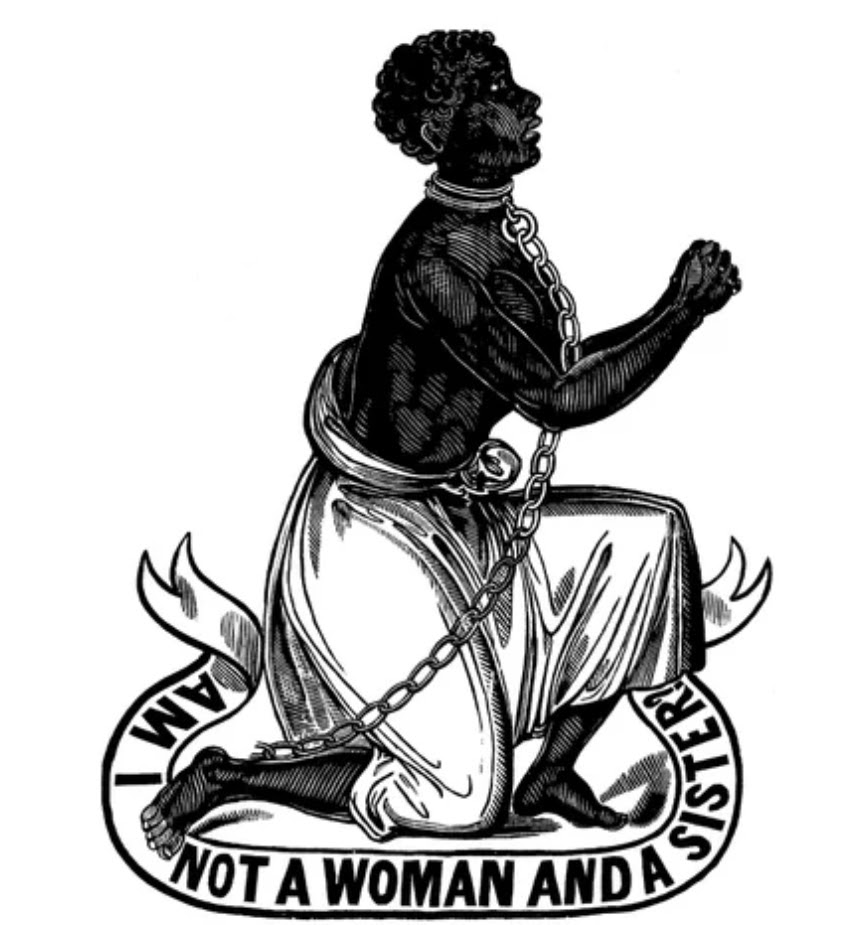
Am I not a woman and a sister? The Norfolk Women Abolitionists
Alison Dow
The Abolition Campaign to end slavery in the British Empire is said to have been the world’s first successful human rights campaign.
Norfolk women including the radical Elizabeth Fry, Amelia Opie and Harriet Martineau played a vital role in the campaign although they themselves lacked even the right to vote. The determined women campaigners employed and developed strategies despite much opposition even from Wilberforce himself. They then used these strategies in the suffrage campaign which was to follow – another great human rights struggle.
The first petition to Parliament asking for votes for women was presented to the House of Commons on 3 August 1832. The Abolition of Slavery Act was passed on 1 Aug 1833.
I will bring alive the story of these woman and introduce some new names – many of whom have been for too long unrecognized.
Tuesday 31st March 2026 at 7:30pm at Cley Village Hall
George Skipper in Cromer
Paul Dickson
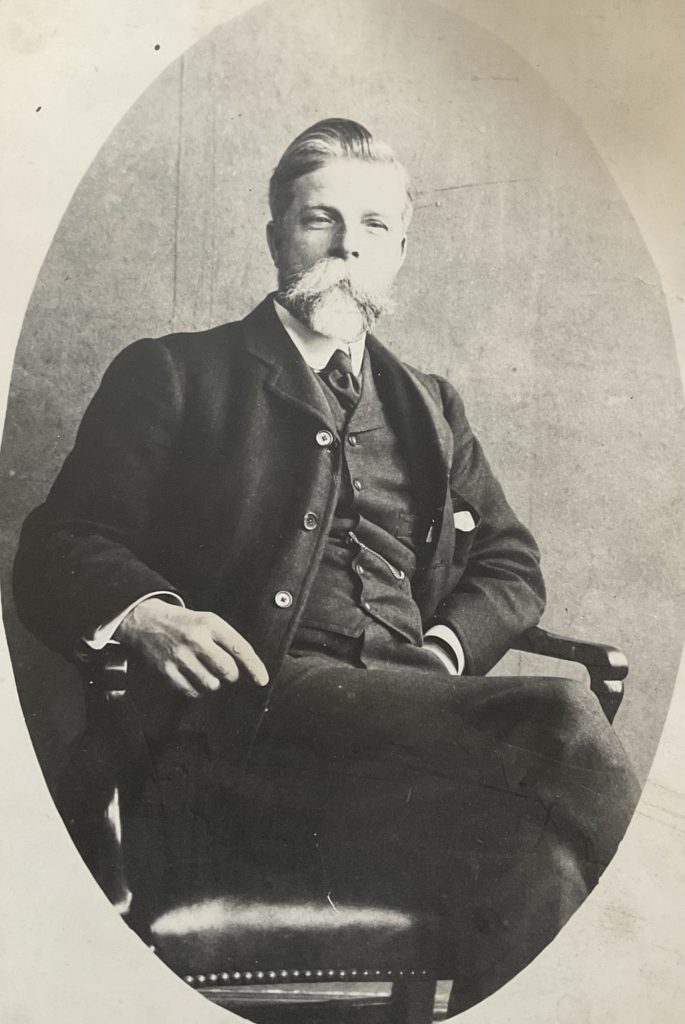
The talk celebrates George Skipper’s architectural legacy in Cromer. He worked on projects there from the late 1880s through to the 1930s. Skipper designed seven hotels, notably the Hotel de Paris and the Cliftonville and Sandcliff on Runton Road.
He was also architect for a range of residential properties on Bernard Road and Vicarage Road, along with Cromer’s first Town Hall and Kingston House, comprising striking residential and business premises just behind the seafront.
Tuesday 28th April 2026 at 7:30pm at Cley Village Hall
Warham Camp archaeological excavations 2023, defining the Iron Age in North Norfolk
Andy Hutcheson
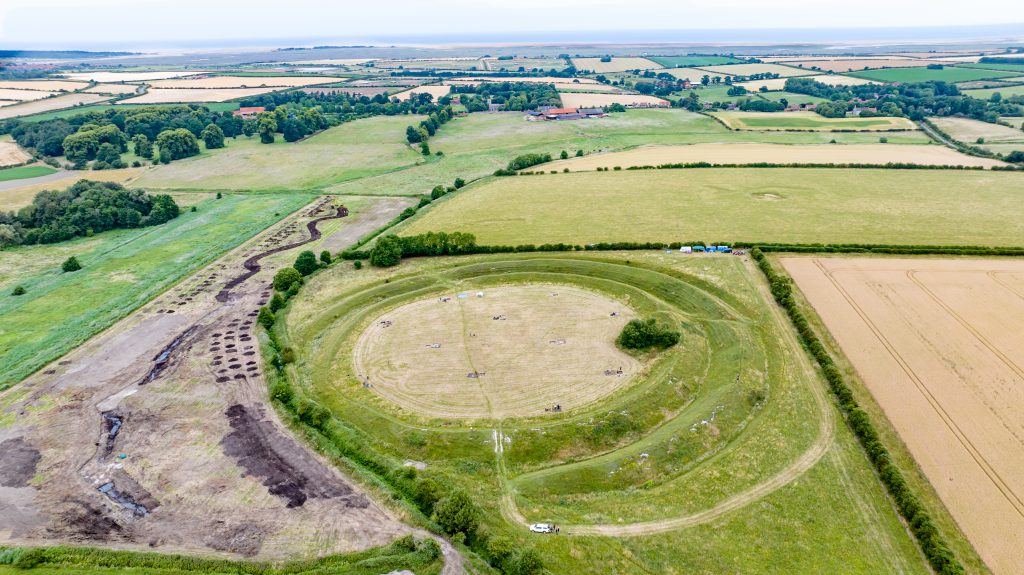
Warham Camp is one of Norfolk’s few ‘hillforts’ and consists of earthworks comprising two
banks and two deep ditches. Hillforts have traditionally been thought of as defensive, though
many would have been used in a variety of ways. Having been dug in 1914 by Harold St
George Gray and in 1959 by Rainbird Clarke, the latest excavations at the camp focused on
determining the date of this stunning site’s construction and establishing what activities may
have taken place within it.
The 2023 investigations involved digging 24 trenches inside the hillfort and three others
within the defences to examine the inner ditch and the base of the earthwork’s banks. Over
3,500 finds were discovered including animal bone, glass and worked flints and 1,405
sherds of pottery.
While the scientific analysis and study of these artefacts and environmental samples is still
ongoing, the project has already revealed some fascinating insights into this enigmatic
monument. Unlike other “developed” hillforts found in Southern England, such as Danebury
(Hampshire) and Maiden Castle (Dorset), Warham Camp does not appear to have been
intensively lived in during the Iron Age. Instead, the archaeology suggests that occupation
was periodic and did not result in significant structures, such as large houses, being built.
During the 3rd and 4th centuries AD some metalworking was taking place though, again, this
did not require the creation of major buildings, showing the fort was reused as a base for
industrial work at the end of the Roman period.
Tuesday 29th September 2026 at 7:30 pm at Cley Village Hall
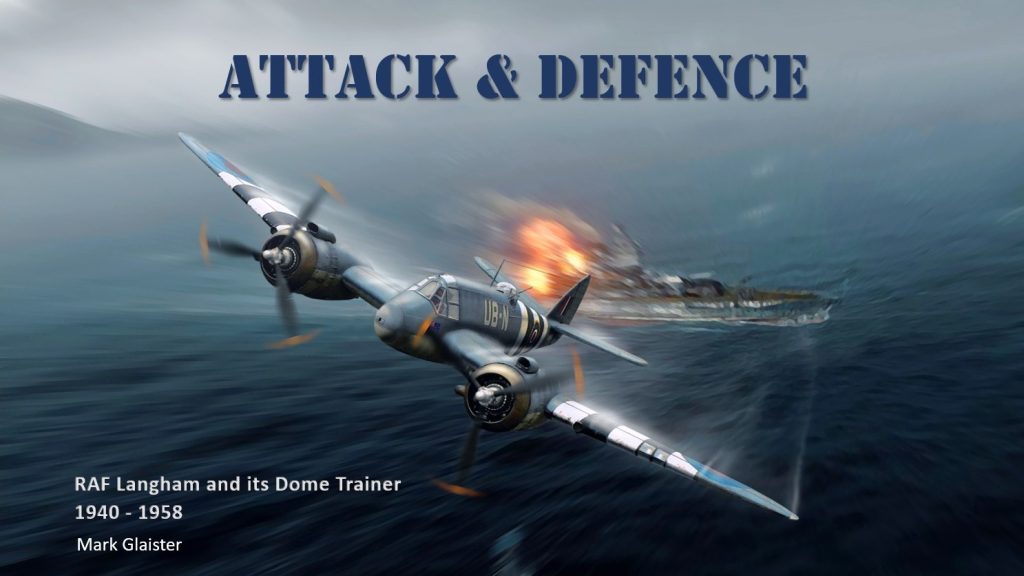
Attack & Defence: A Short History of RAF Langham and its Dome Trainer
Mark Glaister
Tucked away on a disused airfield in a remote corner of North Norfolk lies a strange, dome-shaped building. Its odd, unprepossessing exterior hides one of Britain’s vital World War II military secrets – the invention of a truly visionary man – and its influence is felt even to this day.
Mark Glaister presents a talk on the role of the Dome as well as unforgettable stories of the people and missions flown out of the airfield, RAF Langham, during WWII – including the indomitable Strike Wings of RAF Coastal Command.
Mark Glaister is a local artist and published author. He is one of the Archivists at The Langham Dome Museum and has been entertaining visitors to the Dome with stories of vision, ingenuity, bravery, endurance and sacrifice that he has, with his fellow Archivist, collected over many years – and still discovers today.
Langham Dome Museum is a local attraction that has won multiple prestigious awards, including the late Queen’s Award for Voluntary Service. It is a fully-working restoration facility from World War II and attracts thousands of visitors each year.